Peak Season Arithmetic: Timing a Dehradun Companion Booking Around Diwali and the Wedding Calendar
Most of the year, Dehradun keeps a provincial pace. The Clock Tower roundabout jams by noon, the bakeries near Astley Hall fill and empty on schedule, and an evening in the Doon Valley ends earlier than a visitor from New York or Chicago expects. Then the calendar tilts, and the valley briefly behaves like a much larger city — because, functionally, it becomes one.
Two calendars govern that shift. The first is devotional and fixed by the lunar year. The second is social and fixed by a handful of auspicious dates that tens of thousands of North Indian families plan weddings around. When the two land close together, as they do at the turn of this year, availability for everything — cars, hotel rooms, drivers, and companions — tightens at the same time.
Two Calendars, One Valley
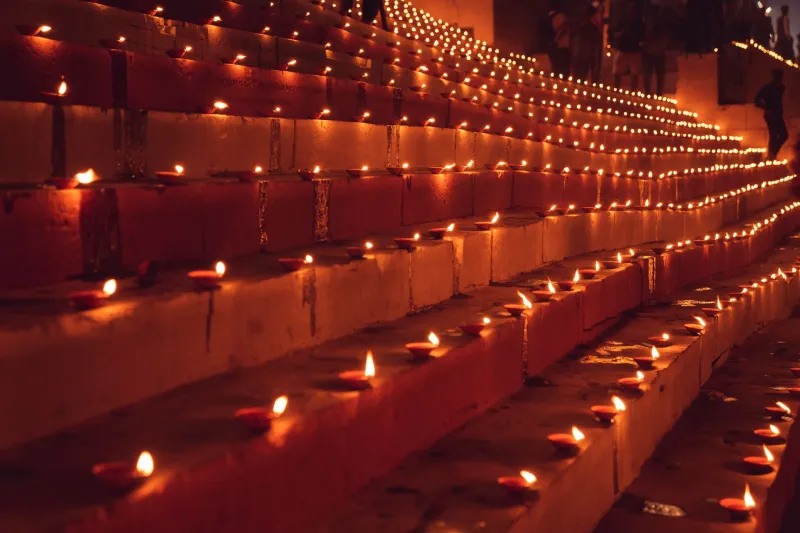
Diwali in 2026 falls on 8 November, with the surrounding observances stretching across the following week. That alone would be enough to strain local capacity: the city fills with relatives returning home, out-of-state traffic climbs the Rajpur Road corridor, and hotels that sit half-empty in August quote firm rates by October.
But Diwali is only the opening movement. Once the lamps are cleared away, the wedding season begins in earnest, and it runs in clusters rather than as a continuous block. Muhurat dates — the specific windows families select for ceremonies — arrive in bursts through late November and December, pause during the inauspicious stretch that many households avoid, then resume from mid-January into February. Layer on the Republic Day long weekend, the Christmas–New Year travel surge, and the Holi break in March 2027, and you have a nine-month map with surprisingly few quiet stretches.
For a client sitting in an American time zone, planning a trip that may only be two or three nights long, this matters more than almost any other variable.
How Demand Distorts the Fundamentals
In a normal week, a booking request placed eight to ten days ahead usually receives a reply within hours. During peak windows, that same request may sit for a day and a half. This is rarely indifference. Independent companions who accept a limited number of engagements are often managing family obligations, festival travel, or — in the wedding months — a diary already filled by out-of-town clients who booked weeks earlier. Response time is the first thing to degrade, and it is the clearest early signal that you have entered a high-demand period.
Availability degrades next. Full-day and overnight arrangements disappear first, because they consume the scarcest resource in the valley: a companion's uninterrupted time and the transport to support it. Two-hour engagements survive longer, but even those compress into narrow bands around a companion's existing commitments.
Where Rates Actually Move
It is worth separating two things that clients often conflate: the published rate and the effective cost of a peak-season booking.
Published rates on most listings do not swing wildly week to week. What changes is the structure around them. Expect to see advance-booking requirements become firmer, minimum engagement lengths increase on prime dates, and out-of-city travel — to Mussoorie, Rishikesh, or the quieter stretches beyond Sahastradhara — priced with more attention to the real cost of a car and driver on a holiday weekend. In the wedding months, hotel and transport costs in the valley rise independently of anything on a profile page, and any companion traveling with you is absorbing those same costs.
A careful reader will also notice that listings with transparent inclusions — clearly stated durations, clearly stated travel terms — become more valuable in peak windows, not less. Ambiguity is cheapest in a buyer's market and most expensive in a seller's.
Early Is Good; Panicked Is Not
There is a difference between booking early and booking rashly. For a Diwali-week or wedding-season visit, three to four weeks of lead time is a reasonable target — enough to secure a preferred date without committing months in advance to arrangements you may need to change. For an ordinary week in the valley, seven to ten days remains comfortable.
The trap is the last-minute gamble. Clients who finalize flights first and companionship second often discover, three days out, that the specific companion they wanted is unavailable and the remaining options are neither what they pictured nor priced as they expected. If a particular arrangement is the point of the trip rather than a pleasant addition, sequence it earlier than your airfare — or at least hold a refundable ticket until it is confirmed.
Flexibility Without Turning It Into a Bet
Flexibility is not the same as vagueness. A booking that can move is one with a defined backup date, not one left perpetually open.
A few practices that consistently work:
- Offer two dates rather than one. Companions managing festival periods can often accommodate an alternate day far more easily than an alternate hour.
- Build a buffer day into the itinerary. Wedding-season traffic between Delhi and Dehradun, and hill-road delays toward Mussoorie, are routine rather than exceptional. A day of slack protects the rest of the schedule.
- Ask about holiday-day availability specifically. Many companions reserve Diwali night, Bhai Dooj, and major ceremony dates for family. This is not a negotiating position; it is a fact of local life, and planning around it produces better outcomes than pressing against it.
- Confirm the deposit and cancellation terms in writing before any transfer. Peak-season terms tend to be stricter, and a written record prevents the disputes that ambiguity invites.
A Working Timeline
For a rough guide: enquiries for the Diwali fortnight and the late-November to mid-December wedding cluster should go out no later than mid-October. The mid-January to February cluster warrants a similar four-week cushion, especially around the Republic Day weekend. The Christmas–New Year stretch behaves much like a Western holiday period, with early firm commitments and little room for improvisation. March 2027, around Holi, is a shorter surge but a real one.
Everything outside those windows is negotiable on short notice, and much of the valley's appeal — the unhurried version of Dehradun that regular visitors prefer — is available precisely then.
The Reasonable Conclusion
The festival calendar does not make a Dehradun booking difficult; it makes it sequential. The clients who fare best are not the ones who book earliest or pay most, but the ones who ask about dates before they ask about anything else, who treat a companion's holiday obligations as legitimate rather than inconvenient, and who understand that a valley of 800,000 people absorbs several million visitors without ever fully adjusting its pace.
Read the calendar first. The rest of the planning tends to follow.